


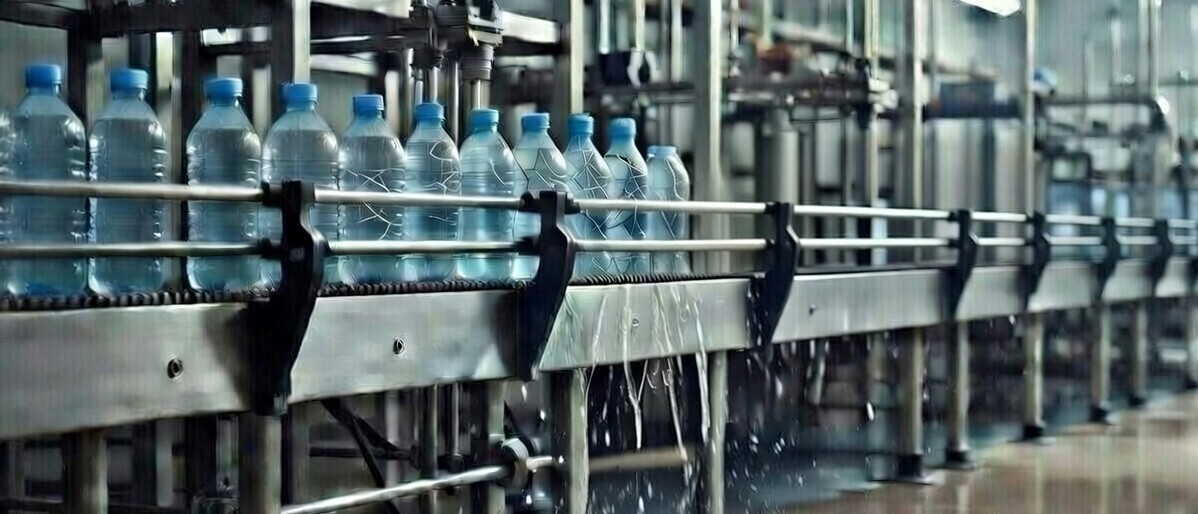
Illustrative image generated by AI.
In industry, waste is not always where you expect it to be.
It is not limited to visible rejects at the end of the line or pallets destroyed after a final inspection.
Often, it starts earlier, invisibly: machine drift, a leak, poorly controlled packaging… and thousands of products, seemingly compliant but fragile, leave the factory.
In a context of increasing regulatory pressure, high production rates and stricter CSR requirements, product integrity is becoming a key lever for sustainably reducing industrial waste. This is precisely where Control Sensei’s expertise comes into its own.
Identifying hidden sources of waste in high demand industries
The most costly industrial waste is often the kind that is not immediately visible.
A product may leave the production line, be stored, transported, shipped… before the defect is detected. And at that point, it is too late, the damage has been done!
In the field, and in my experience, there are numerous examples.
Entire containers shipped to the other side of the world, loaded with leaky products (which leak, in our jargon!) that have not been tested beforehand, result in dozens of tonnes of lost goods, massive financial consequences, and a direct impact on the manufacturer’s credibility.
Another common situation: a production batch blocked at the factory due to contamination or non-compliance, requiring the urgent mobilisation of human, technical and logistical resources in an attempt to salvage what can be saved.
Added to these losses is a more insidious form of waste: that generated by destructive testing methods.
A destructive test involves checking the watertightness or integrity of a product… by rendering it unsuitable for sale.
Conversely, a non-destructive test allows inspection without destruction, and therefore without wasting the units tested.
The difference is significant: at high speed, thousands of products are sometimes destroyed every day, solely for the purpose of inspection.
The waste does not come from a lack of inspection, but from an inspection process that could be improved.
Product integrity as a lever for reducing waste and complying with standards
Putting product integrity at the heart of industrial strategy means focusing on quality, compliance and loss reduction.
Integrity tests, leak tests, dry tests or immersion tests: each method meets a specific need and complies with recognised standards. (ASTM, ISO).
Beyond testing methods, manufacturers are now facing a more profound transformation: the evolution of packaging materials and standards!
Regulation 2025/40 PPWR (Packaging and Packaging Waste Regulation) of 2024 requires recyclable packaging by 2030. However, packaging is often not recyclable because it is made up of several layers of non-separable materials.
To simplify:
- Monolayer (or single-material) packaging is made up of a single family of materials: it is more easily recyclable.
- Multilayer packaging combines several layers (plastic, aluminium, paper, etc.): it is technically efficient and, above all, it is mandatory in certain industries, such as those involving food contact. However, the layers are difficult to separate, which makes recycling complex: these constraints require a rethink of production lines and practices.
This transition to recyclable materials entails changes in mechanics, welding, etc. to ensure product integrity in a new context and minimise leaks, waste and wastage. Manufacturers will have to rethink their production lines, materials and testing tools to meet these new requirements.
Concrete methods for combining performance and environmental responsibility
In my opinion, reducing industrial waste is based on a structured approach and solid support (and not on a miracle recipe).
At Control Sensei, the approach is based on several key steps.
- It all starts with a precise diagnosis of the need: type of packaging, presence of air, line speed, regulatory constraints, level of maturity of the teams. This phase avoids a mistake (quite common): investing in an oversized solution… or unsuitable.
- Then comes the reasoned choice of tools. The objective is not to sell a technology, but to respond to a concrete problem: reducing leaks, stabilizing the process, limiting scrap. Our approach and our solutions are adapted to the questions, needs and objectives of our interlocutors:
- a technical approach when we exchange with the field teams,
- with the purchasing departments,
- and ROI-oriented with management.
- The installation and optimization of the processes then make it possible to secure production over time, while limiting travel, paper documentation and unnecessary interventions. Industrial performance and environmental responsibility are moving in the same direction here (#cohérence!).
Finally, the economic reality must be clearly stated. For example, many manufacturers are reluctant to invest in a control tool for low-value unit products. However, at a high rate, a drift of a few hours represents thousands of euros in losses. In many cases, the investment in a well-sized solution pays for itself in a matter of weeks, simply by avoiding stoppages, scrap or non-compliant shipments.
With the PPWR now in force, this approach is no longer optional. Changes in materials, production lines and processes make support essential in order to remain competitive, compliant… and responsible.
Ultimately, reducing waste may begin with a better understanding of products and current challenges.
By placing product integrity at the centre of technical and economic decisions, manufacturers can reduce losses, ensure regulatory compliance and improve their environmental performance in a sustainable manner.
It is a pragmatic, measurable and profitable approach.
If you have questions about potential invisible losses in your production line or the PPWR transition, a targeted assessment is often the first step towards sustainable gains. I am available to guide you.