



Artificial intelligence inspires both fascination and apprehension, but on a production line, it remains a pragmatic tool for safety and waste reduction (yes, that again!).
At high industrial speeds, the human eye reaches its limits: it can no longer see everything, let alone the tiny details.
My discussions with Emilio J. de la Red, Director of Innovation and Development at Inndeo (and its Inspectra brand), inspired me to write this article and share my point of view (no pun intended).
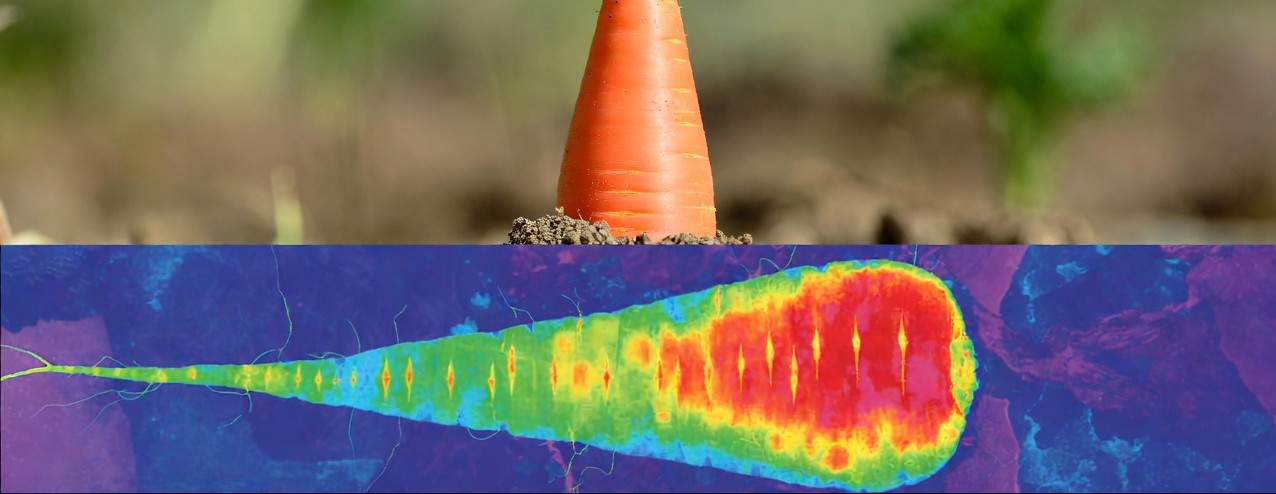
By going beyond the visible spectrum to identify the unique light signature of each material, hyperspectral vision makes it possible to ensure product integrity where conventional methods fail, transforming AI into a precision super-assistant for the industrial sector.
Understanding hyperspectral imaging
Conventional vision, as provided by our standard cameras or our beautiful eyes, is limited to the visible spectrum (red, green, blue).
Hyperspectral vision goes much further by dividing light into a multitude of narrow ‘bands’, covering infrared and ultraviolet light in particular.
The luminous signature: the fingerprint of materials
Each material has a unique ‘light signature’. Whether it is a plant fibre, a piece of plastic or a metal fragment, each material reacts differently to certain wavelengths.
By precisely selecting these bands, we can do more than just distinguish a shape or colour: we can identify the very nature of what we are looking at.
It is this ‘digital fingerprint’ that allows us to distinguish between two elements that are visually very similar but chemically different.

Why the human eye and X-rays are not always sufficient
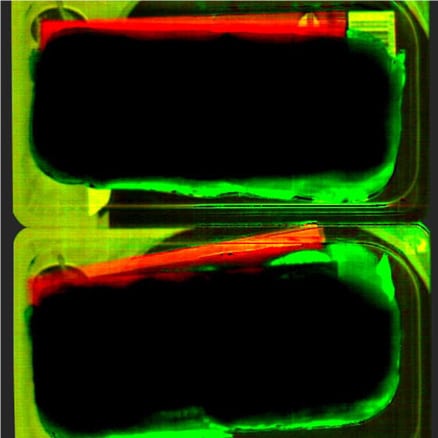
In industry, X-rays are often used to detect foreign objects. This is an effective method for metal or glass, for example, but it is limited to black and white imaging based on the density of the material.
A small piece of plastic in a bag of frozen vegetables may therefore go unnoticed. The same applies to a small piece of green plastic lost in a pile of spinach leaves or beans.
For the human eye or a conventional camera, the distinction is impossible to make.
For the hyperspectral camera, however, it is strikingly obvious: plastic and vegetables have radically different light signatures.
The defect is immediately apparent, and the AI can raise the alarm.
AI at the service of agri-food performance: responsiveness and anti-waste
The integration of AI into this process is not intended to replace humans (which is a legitimate concern), but rather to offer them enhanced analytical capabilities in order to address two major issues: food security and logistical emergencies.
Detecting the invisible to avoid product recalls
With plants (fruit, vegetables, herbs) and fresh produce, there are constant risks. A turnip that has slipped into a batch of carrots, or – worse still – soft plastic residues from the sorting and packaging process.
Detecting these anomalies upstream means avoiding the worst-case scenario of a product recall. Because a recall (remember!) means considerable financial loss, but above all, lasting damage to consumer confidence.
The immediacy of hyperspectral imaging allows anomalies to be corrected in real time.
Winning the race against the logistical clock
Time is money. For perishable goods such as meat, fish or fresh vegetables, blocking batches while manual analysis is carried out or doubts are confirmed or refuted is not viable.
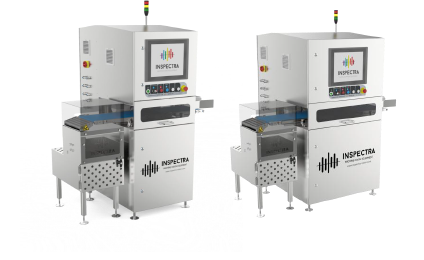
The hyperspectral camera coupled with AI enables instant detection, drastically reducing line downtime and avoiding the waste of entire pallets that would otherwise end up as scrap.
But... AI does not do everything
However, AI cannot take on the role of an infallible judge. Its role is to become a precision assistant and alert operators in case of doubt.
The hyperspectral vision system coupled with AI can express a percentage of uncertainty (for example, ‘70% risk that this item/batch is non-compliant’).
In this case, AI does not destroy the product, but isolates the batch. The operator then intervenes to validate or invalidate the diagnosis.
This synergy allows compliant products to be returned to the production line, thus limiting false positives and enhancing the value of human expertise in the field.
Control Sensei and Inspectra: synergies for a more virtuous industry
With Control Sensei, I guide my clients and select the best technologies to meet their challenges in the field. The relationship that is being forged with Inspectra Powered by Inndeo allows us to offer innovative and relevant solutions for the sector in terms of non-destructive detection.
A concrete environmental impact
One of the indirect, but major, benefits of this technology concerns CSR . Today, many manufacturers use brightly colored plastics (blue, purple) only to create visual contrast and facilitate the detection of foreign bodies. With hyperspectral vision, there is no need for this contrast: AI identifies the material, not the color or shape. Ultimately, the process paves the way for more sober packaging, which is easier to recycle, because it is free of these often polluting coloured components.
Control Sensei support: towards more autonomy
Adopting hyperspectral vision requires an understanding of the physical phenomena at play and an increase in the skills of the teams. This is, as you know, one of the strengths and one of the key commitments of Control Sensei.
We support you so that a chosen technology becomes a lever for fluidity and serenity on your lines.
And if I am convinced by the proposal of hyperspectral vision coupled with AI d’Inspectra Powered by Inndeo, it is because this innovation is the guarantee of a food industry that does not compromise safety in favor of speed.
And then, it is to give humans “the power to see the invisible” to better protect their product and their customers.
Are you dealing with complex foreign body problems or do you want to optimize your quality controls on fresh products? Let’s discuss the relevance of hyperspectral vision for your production lines during an appointment.