



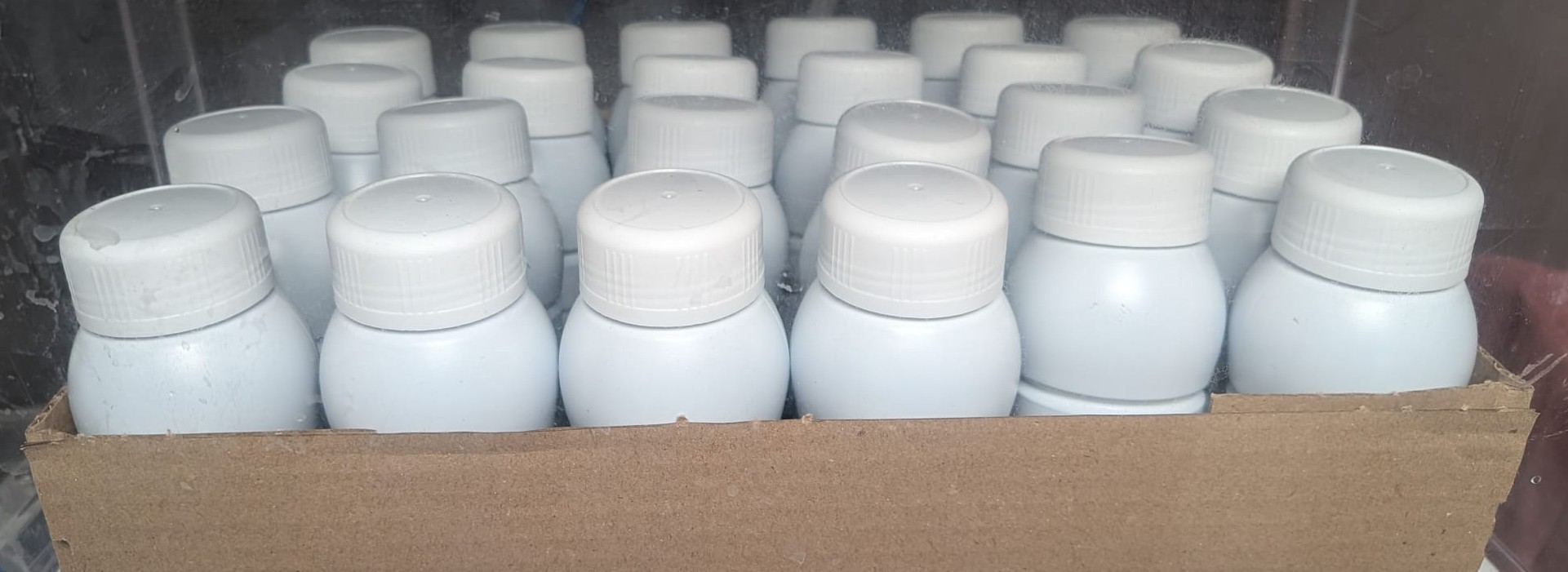
I regularly carry out in-flight tests. And it was a test for a major player in the pet food industry, involving fortified milk for puppies and kittens, that gave me the idea for this article.
When a food and drink manufacturer prepares to export reactive formulations, the issue goes beyond the integrity of the packaging. What the R&D and Quality teams are also seeking to validate is the chemical stability of the formulation: do the vitamins, proteins and active ingredients retain all their properties after a ten-hour journey at high altitude?
Sending pallets on actual flights solely to take samples on departure and arrival is costly, complex and does not always allow for the best monitoring of conditions. Vacuum simulation in the laboratory offers a scientific and pragmatic alternative: faithfully reproducing the barometric conditions of a long-haul flight to measure the stability of formulations without ever leaving the ground (a good CSR point, incidentally).
In this article, let’s look at why and how to carry out these tests without leaving the ground.
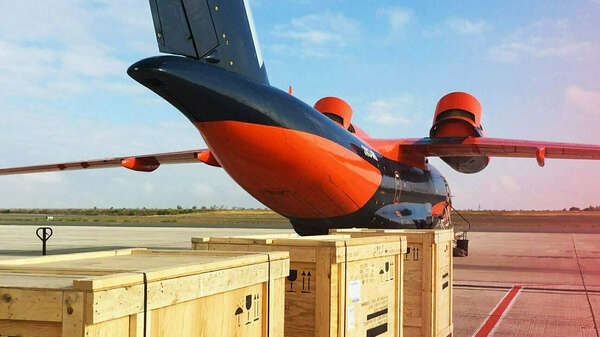
Why travelling at high altitudes threatens the stability of chemical compositions
In the case of enriched and light-sensitive nutritional products, the physics of air transport have an impact that goes beyond the mechanical deformation of the packaging. At altitude, the ambient pressure in the hold drops. This barometric pressure difference can alter the internal physical equilibrium of the formulation.
Under the effect of the reduced pressure, gases dissolved in liquids or powders seek to escape, surface tensions change and gas exchange accelerates. If a formulation reacts poorly to this prolonged drop in pressure, its homogeneity, texture or nutritional value may deteriorate. For an R&D department, discovering that active ingredients have deteriorated after several tonnes of goods have been dispatched represents a significant cost and logistical effort.
Simulating a 10-hour flight in a simulation vacuum chamber
Rather than testing batches without monitoring over time in the holds of commercial aircraft, the approach involves replicating flight conditions in the laboratory.
For example, in the case of fortified animal milk, the protocol developed recreates the entire supply chain in order to compare the exact composition of the product before departure and after the simulated journey.
A complete logistics process from the dairy to the recipient
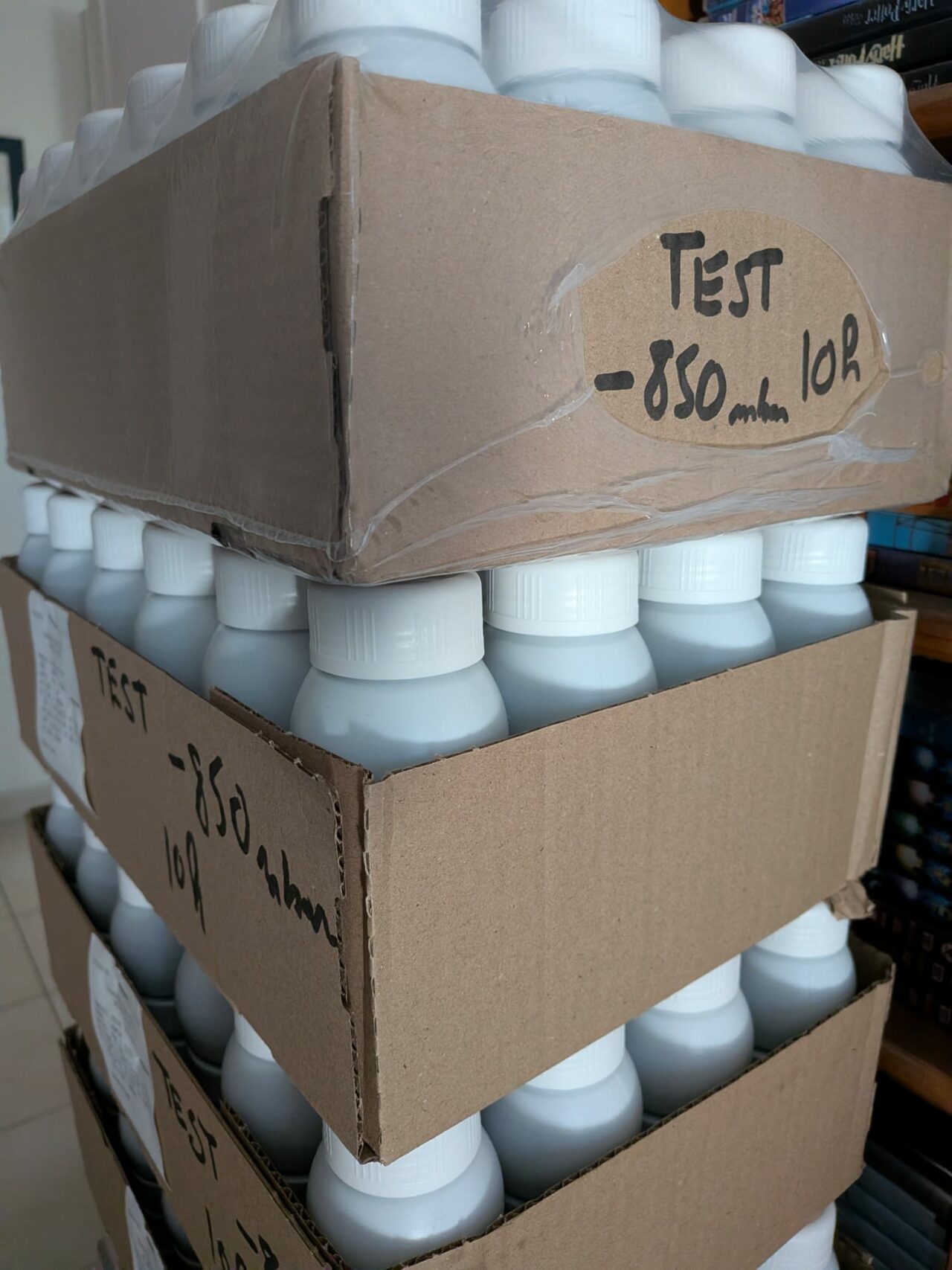
The protocol begins by simulating the initial road transport from the production site to the laboratory (in this case, the Contrôle Sensei laboratory, which will act as the airport, aeroplane and cargo hold!)
The samples are then placed in a vacuum chamber to undergo a ten-hour flight cycle involving:
- A gradual drop in pressure during take-off and during the ascent phase of the flight.
- Prolonged maintenance of this reduced pressure during the cruise phase.
- Repressurisation during the descent towards the destination airport.
To ensure the test is as realistic as possible, the return journey of the samples on a pallet to the customer mimics that of a delivery from the airport.
Cruising speed versus extreme depressurisation
To understand how the material behaves, the samples were divided into two distinct groups:
- Normal cruising conditions (-350 mbar): simulation of a standard flight in a pressurised cargo hold, equivalent to an altitude of approximately 3,500 metres.
- Extreme depressurisation conditions (-850 to -900 mbar): simulating an incident in which the cargo hold suffers a loss of pressure at altitude.
This dual-pronged approach enables the stability of the assets to be validated under standard conditions, whilst identifying the failure point of the formulation in the event of a fully depressurised flight.
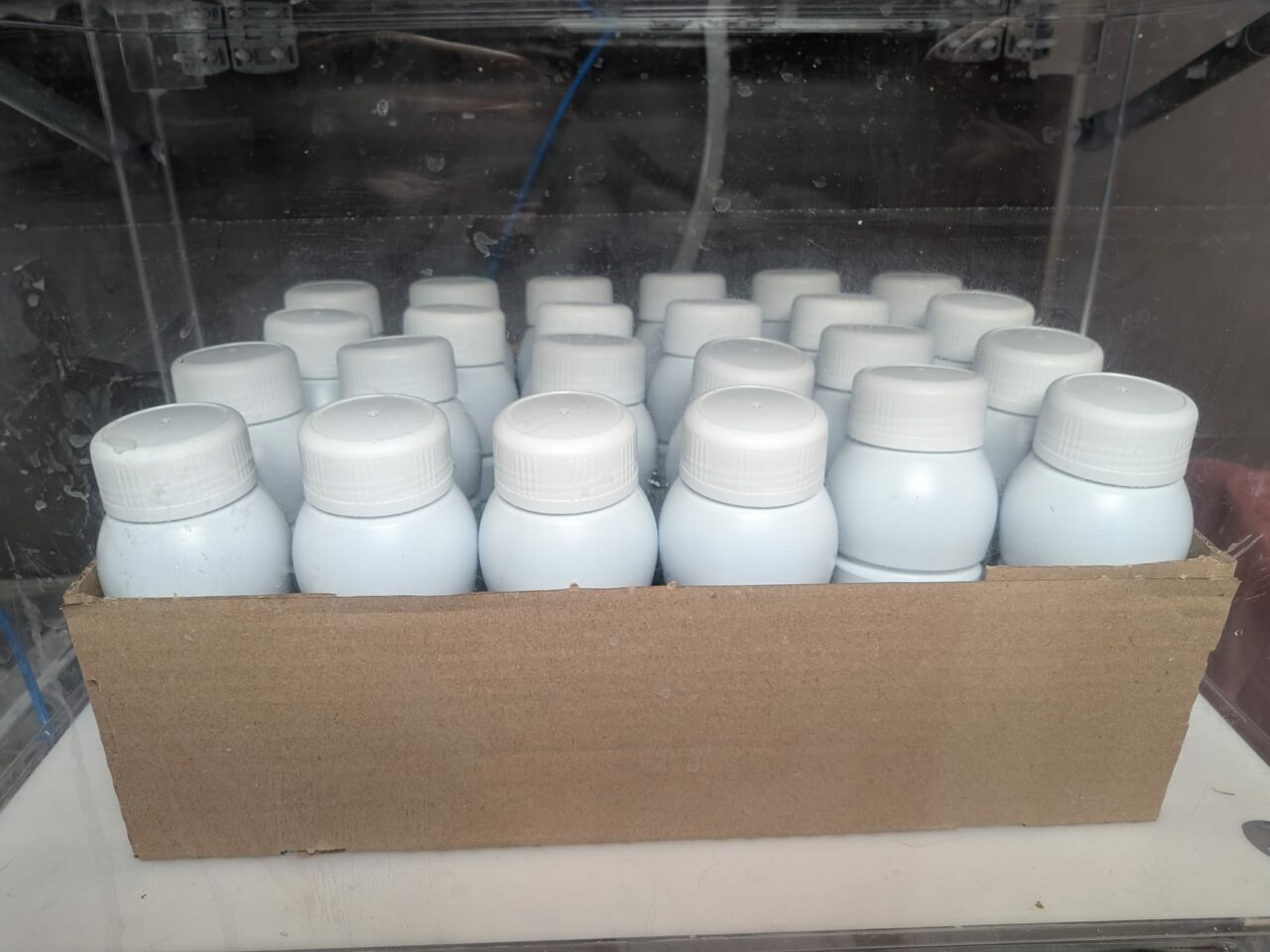
Characterising the product’s chemical composition through precision analysis
Next comes the comparative analysis of the samples. By analysing the control samples before the test and immediately after the simulated flight, the scientists measure the actual impact of pressure on vitamin concentrations and the preservation of active ingredients, in accordance with their established protocol.
The role of Control Sensei in these flight simulations
My role is to ensure the necessary physical rigour for this experiment:
- To fine-tune the vacuum machines to guarantee the repeatability of the vacuum gradients.
- To monitor the progress of the cycle to prevent any experimental errors.
- To document all the physical parameters for each batch tested.
And above all, to enable the teams to reduce their development costs whilst optimising tests through human oversight and perfect control of the protocol.
In short, we don’t guess what’s happening in the cargo hold – we measure it systematically!
Testing the stability of a formulation in a simulation chamber provides invaluable peace of mind for R&D teams. It avoids the need to commit huge budgets to actual flights, whilst providing reproducible and auditable scientific results.
> If you are developing reactive formulations for the international market, let’s discuss how to design a simulation protocol tailored to your requirements.